

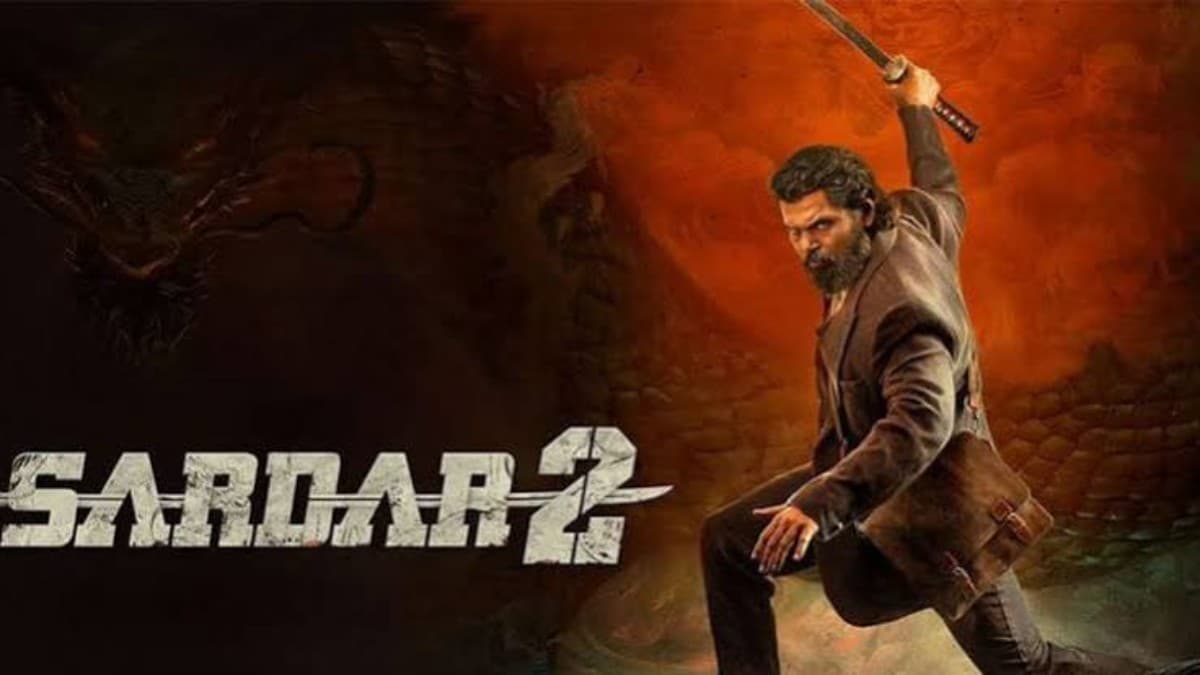
★★½☆☆ 2.5/5 - ONLY FOR KARTHI FANS
Karthi's committed dual performance and a handful of effective spy-action stretches keep Sardar 2 moving, but predictable writing, limited emotional tension and an exhausting three-hour runtime leave the sequel below its potential.
Positives
- Karthi's contrasting father-and-son performances
- Several well-staged action and chase portions
- Malavika Mohanan makes an impression in a limited role
- A potentially interesting bioweapon and antibiotic-resistance theme
Negatives
- Nearly three-hour runtime
- Predictable and convenient screenplay
- Second half and climax run too long
- Supporting characters lack sufficient depth
- Uneven background score and visual effects
Sardar 2 has the scale, central conflict and returning star required for a bigger sequel, but the film does not consistently turn those elements into a gripping spy thriller. Director P.S. Mithran starts with enough information, danger and mission-based intrigue to hold attention, particularly when the story connects Sardar's past with the present threat. Once the film begins expanding every idea, however, momentum becomes harder to sustain.
Karthi again plays veteran spy Sardar Chandra Bose and his son Vijay Prakash, now connected to RAW. The new mission centres on Black Dagger, played by S.J. Suryah, and a dangerous bioweapon linked to an operation from Sardar's past. The setup gives the film room for espionage, moral conflict and a father-son dynamic, but several of those threads remain less developed than the scale of the plot suggests.
At roughly 179 minutes, the length becomes one of the film's clearest problems. The first half moves more effectively through missions, revelations and callbacks to the earlier film. The screenplay becomes less disciplined later, repeating information and stretching confrontations that could have been sharper. The lengthy final stretch particularly reduces the urgency that a high-stakes spy thriller needs.
Performances, Writing and Technical Work
Karthi remains the film's main strength. He creates a noticeable distinction between the older Sardar and the younger Vijay Prakash, giving the veteran spy more authority while allowing Vijay to feel comparatively impulsive and vulnerable. The material does not always give both characters equal depth, but Karthi's presence prevents several extended portions from becoming completely flat.
S.J. Suryah brings his familiar intensity to Black Dagger, yet the antagonist is written more as a vehicle for the central threat than as a fully developed opponent. His motivation and extended explanations receive plenty of screen time without generating the level of menace the story requires. Malavika Mohanan fares better in her key sequences, particularly when the film gives her character agency within the mission, though the supporting roles around the central conflict remain largely functional.
Mithran has a substantial idea at the centre of the screenplay. The film connects biological warfare with concerns around antibiotic resistance, while also returning to questions of duty, betrayal and the personal cost of intelligence work. The problem is execution. Exposition frequently takes over scenes, some developments arrive too conveniently, and the heroes rarely appear vulnerable enough for the danger to feel overwhelming. That weakens suspense even when the stakes are enormous on paper.
The action provides intermittent energy, including chase and mission sequences that are clearer and more engaging than the dialogue-heavy stretches. George C. Williams' cinematography gives individual set pieces scale, but the visual effects are inconsistent. Sam C.S.'s background score does not consistently add the tension or mass impact expected from the bigger moments. Vijay Velukutty's editing is where the film most obviously needed restraint, especially through the second half and extended climax.
Viewers who enjoy Karthi, large-scale spy stories and commercial action may still find enough here for a one-time theatrical watch, particularly for the dual-role performance and selected action portions. Those expecting a tight thriller with constant suspense, strong emotional payoffs and the brisk pacing associated with the first film are more likely to feel the runtime.
Verdict
Sardar 2 does not fully live up to the expectations created by its premise and franchise. Karthi works hard to hold together an ambitious spy story, and there are flashes of an entertaining sequel in the action, past-mission material and central threat, but the writing keeps expanding instead of tightening.
For Karthi fans and viewers who enjoy elaborate espionage dramas, it remains a possible one-time watch. For audiences looking for a sharp, consistently tense sequel, the predictable screenplay, thin character development and prolonged second half make waiting for an OTT viewing the easier choice.