

Lust Stories 3 has enough wit, strong performances and fresh perspectives on intimacy to justify its long runtime, although inconsistent storytelling stops all four segments from landing with equal force.
Positives
- Strong performances across the ensemble, especially Radhika Apte, Konkona Sen Sharma, Ali Fazal, Radhika Madan and Aditi Rao Hydari
- Four clearly different approaches to desire, marriage and emotional intimacy
- Shakun Batra’s emotionally charged relationship drama has compelling central chemistry
- Vishal Bhardwaj’s period story brings humour, fantasy and a clear female perspective
Negatives
- The 164-minute runtime feels excessive for a four-part anthology
- Some segments are sharper and more emotionally developed than others
- Kiran Rao’s twist-driven chapter does not dig as deeply into its characters
- The later stories occasionally become stretched or overly explanatory
Lust Stories 3, which began streaming on Netflix on September 18, 2026, is not the big disappointment its unevenness might suggest. The four-film anthology gives Vikramaditya Motwane, Kiran Rao, Shakun Batra and Vishal Bhardwaj separate spaces to examine physical desire, marital dissatisfaction, emotional disconnection and the need to feel wanted. At 2 hours and 44 minutes, however, it asks for more patience than either of the previous editions.
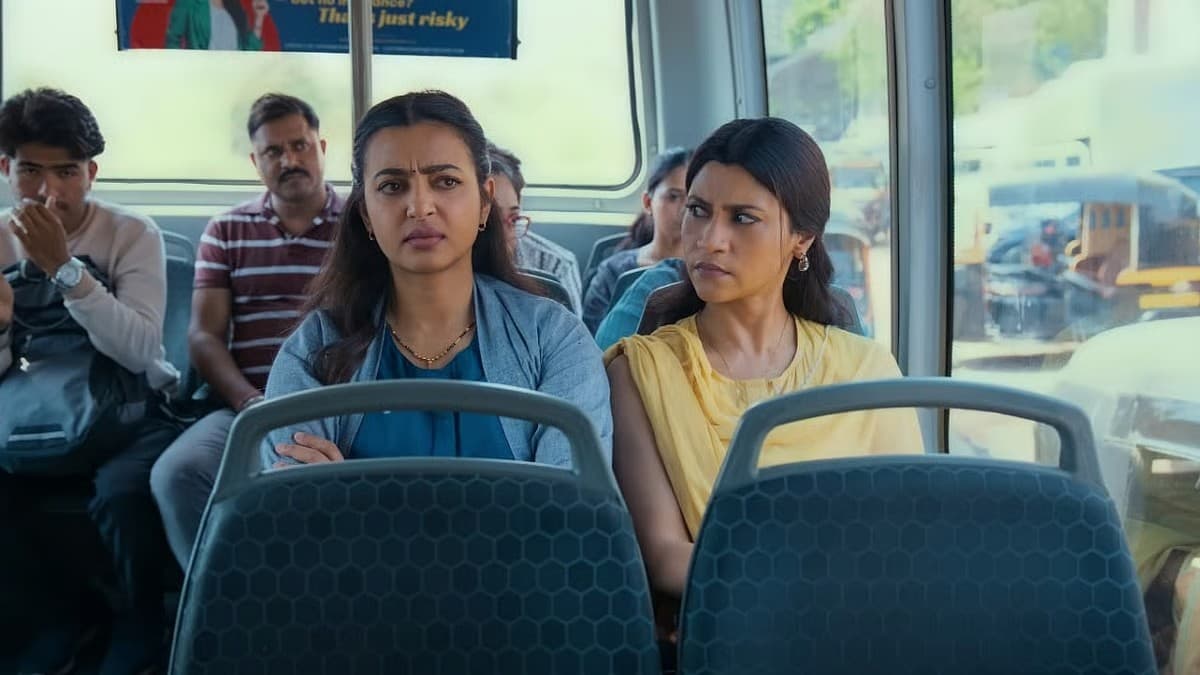
Motwane opens with Radhika Apte and Konkona Sen Sharma as close friends whose unsatisfying married lives lead them towards the risky idea of swapping husbands, played by Vijay Varma and Abhishek Banerjee.
The potentially broad setup stays rooted in middle-class awkwardness, friendship and the contrast between romantic fantasy and everyday marriage. Apte’s nervous restraint and Sen Sharma’s more adventurous energy give the episode much of its comic and emotional pull.
Kiran Rao shifts to a younger Mumbai story involving Gurfateh Pirzada and Sana Thampi. Attraction gradually becomes entangled with deception, ambition and a crime angle. It supplies pace and tonal variety, and Pirzada handles the story’s dual-role device effectively, but the heavy dependence on twists leaves the relationship less emotionally involving than the anthology’s stronger chapters.
Performances, Writing and Technical Work
The acting is the anthology’s most dependable strength. Ali Fazal and Radhika Madan bring anger, attraction and lingering affection to Shakun Batra’s story about a couple moving towards divorce while remaining physically drawn to each other.
Their scenes capture the contradiction at the centre of the short: two people who struggle to communicate in ordinary conversation but still find an immediate connection through sex. The performances keep the emotional conflict convincing even when the writing starts explaining feelings that were already visible through behaviour.
Batra’s chapter is also the most serious relationship study of the four. Divorce, family interference, resentment and differing ideas of what love should look like give it more emotional weight than the lighter stories around it. Its weakness is length. The dialogue grows increasingly dense, and the final stretch spells out some of the emotional subtext instead of trusting the central performances to carry it.
Aditi Rao Hydari and Siddharth anchor Vishal Bhardwaj’s 1987 Hyderabad-set finale. Hydari plays Saira, a married woman whose dissatisfaction with routine intimacy pushes her imagination towards romantic and erotic writing.
Bhardwaj uses fantasy, period humour and a reversal of the usual screen gaze to keep Saira’s desires at the centre. Siddharth embraces the playful tone, while Gajraj Rao adds warmth as her father-in-law.
The chapter can feel stretched and deliberately exaggerated, but its distinctive period setting and Hydari’s comic vulnerability give the anthology an energetic finish.
Across the four shorts, the production design successfully separates contemporary Mumbai, middle-class domestic spaces and the stylised Hyderabad period setting.
The main technical problem is editing. The first two stories move relatively briskly, while the latter half would benefit from tighter cuts, contributing to the sense that 164 minutes is longer than the material needs.
Viewers who enjoy adult relationship dramas, anthology storytelling and films that discuss female desire without turning every conversation into a moral lesson are the clearest audience for Lust Stories 3.
It is less suitable as a family watch because sexuality and intimate relationships drive all four stories. As a Netflix release, it also benefits from the ability to watch the segments separately rather than treating the full runtime as one uninterrupted sitting.
Verdict
Lust Stories 3 is worth watching, but expectations should be measured. Motwane brings breezy marital comedy, Rao adds a lighter game of attraction and manipulation, Batra supplies the emotional friction, and Bhardwaj closes with the anthology’s most openly playful exploration of female pleasure and imagination.
What prevents the third instalment from becoming a stronger film is its uneven depth and overextended runtime. Still, the cast, contrasting directorial voices and willingness to approach intimacy from a woman-centred perspective give it enough personality to avoid being a disappointment.
For viewers interested in mature relationship stories, it works best as a solid one-time OTT watch.