

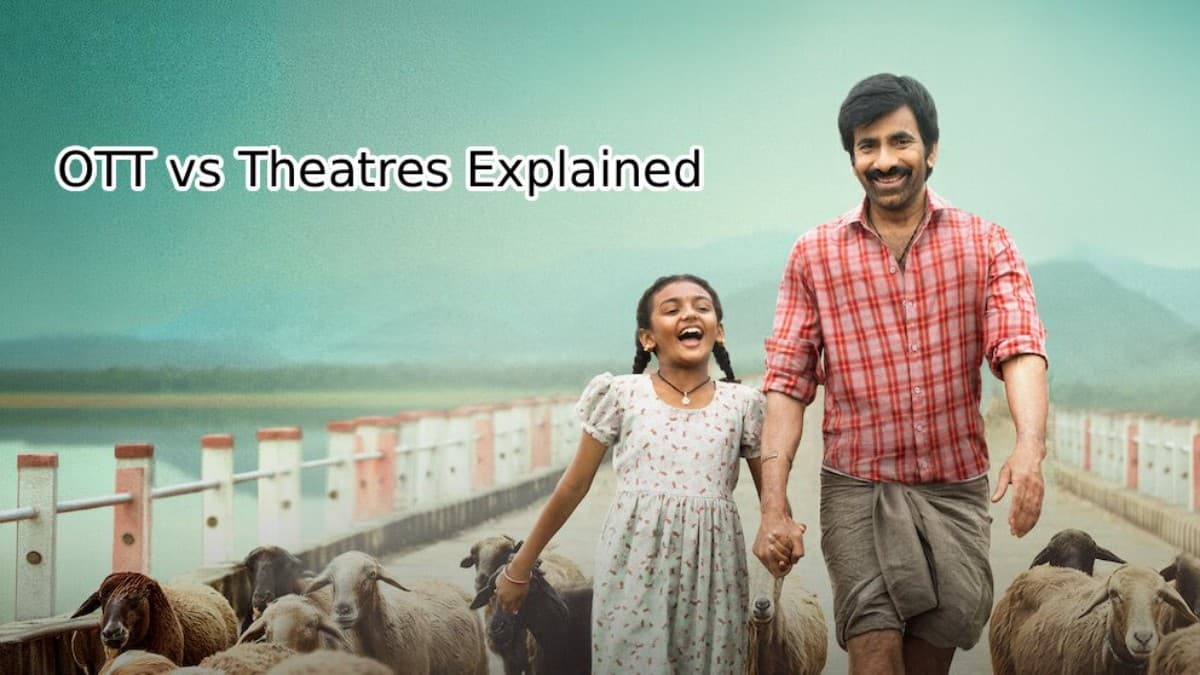
Irumudi arrived on Netflix on September 18, 2026, after becoming the biggest theatrical success of Ravi Teja’s career. Within days of its streaming debut, however, the conversation around Shiva Nirvana’s emotional drama changed sharply. Viewers on social media began picking apart the screenplay, logic, second-half developments and the film’s treatment of disturbing incidents involving schoolgirls.
The backlash is real, but the OTT response is not uniformly negative. Some viewers continue to praise Ravi Teja’s restrained performance, the father-daughter relationship, devotional portions and emotional climax. Others are questioning how a film they consider uneven or overly convenient became such a major theatrical hit.
That contrast has turned Irumudi into an unusual case study in how the same film can generate very different conversations in theatres and on streaming.
The debate is even more striking because its commercial success is not in doubt. Current trade tracking places Irumudi at approximately ₹240.13 crore worldwide through Day 30, including ₹187.38 crore India net. The film was still collecting in theatres after becoming available on Netflix.
The criticism existed before the Netflix release
Netflix did not suddenly create every criticism now being directed at Irumudi.
When the film opened theatrically on August 21, several reviews praised Ravi Teja for moving away from his familiar mass-comedy image and playing Trinadh with greater restraint. Baby Nakshathra’s performance and her emotional bond with Ravi Teja were also widely identified as strengths.
At the same time, the theatrical response was already divided over Shiva Nirvana’s writing. Reviews questioned narrative conveniences, predictable thriller portions, uneven pacing and developments designed primarily to increase emotional shock.
Those concerns are now receiving much greater attention because streaming viewers can assess the film outside the atmosphere of an opening-week theatrical experience.
The film had also faced controversy before its OTT premiere. The Andhra Pradesh Teachers Federation objected in August to the portrayal of government schools and teachers and sought the removal of scenes it considered damaging to the public education system.
Theatres vs Netflix: Why the response feels so different
In theatres: Irumudi had several elements suited to a large-screen emotional experience. Ravi Teja’s performance, the father-daughter relationship, Ayyappa Deeksha backdrop, G. V. Prakash Kumar’s music and the film’s emotional peaks gave audiences moments that could dominate the overall viewing experience. The strong theatrical run shows that a large paying audience connected with that combination.
On Netflix: attention has shifted toward the mechanics of the screenplay. Viewers are debating character decisions, convenient turns in the investigation and revenge portions, the handling of the school storyline and whether certain developments remain convincing when examined scene by scene.
The home-viewing environment also changes how a film is consumed. Streaming audiences can pause, replay scenes and immediately discuss individual plot points online. Emotional momentum that works continuously inside a theatre can therefore face a different test when the film is watched in sections or examined after specific scenes.
Netflix has also widened Irumudi’s audience beyond the Telugu theatrical market. The film is reaching viewers through dubbed versions, bringing in people who may respond differently to its devotional setting, family sentiment and commercial Telugu-film structure.
That does not mean dubbed-language viewers have responded in one direction. Recent coverage itself reflects the split, with some reports highlighting criticism from Hindi-speaking viewers and others reporting strong appreciation for Ravi Teja and the film’s emotional portions.
Why the child-abuse storyline is attracting sharper scrutiny
A significant part of the current debate concerns the movie’s treatment of crimes involving schoolgirls.
Irumudi begins primarily as a father-daughter emotional drama with an Ayyappa devotional backdrop. It later moves into a darker story built around harassment, exploitation, violence and a school-related scandal.
Some viewers believe the film is using a serious social issue to communicate the need to protect children and encourage girls to speak without fear. Others argue that the screenplay repeatedly uses trauma as a device to produce shock, anger and motivation for the hero.
That disagreement goes beyond questions about plot logic. It concerns the way commercial cinema handles sensitive material involving minors.
The earlier objections from the Andhra Pradesh Teachers Federation also give this discussion additional context. Concerns about the representation of the school and teaching system existed during the theatrical run, even before the current wave of streaming criticism.
Box-office success and OTT criticism can coexist
The biggest misconception in the current debate is that one response must invalidate the other.
Irumudi’s theatrical success is measurable. The film stayed in cinemas for weeks, crossed major commercial milestones and remained in theatrical circulation even when its Netflix release arrived.
The OTT criticism is also visible. Recent online discussions have concentrated heavily on writing choices, logic and sensitive content.
But social-media criticism cannot by itself establish that Irumudi has failed on Netflix. Public Netflix viewing data is needed to measure its actual streaming reach and performance.
Similarly, strong box-office numbers do not mean every section of the audience considered the screenplay flawless. A commercially successful film can still produce strong disagreement over writing and subject matter.
Analysis
Verified facts: Irumudi opened theatrically on August 21, became Ravi Teja’s biggest box-office success, began streaming on Netflix on September 18 and has subsequently attracted a visible wave of online criticism. The film had already received mixed assessments of its writing during its theatrical release, and the Andhra Pradesh Teachers Federation had objected to its portrayal of government schools and teachers.
Editorial analysis: The sharp contrast is therefore better understood as a change in the centre of discussion rather than a sudden reversal of public opinion. The theatrical conversation was driven heavily by Ravi Teja’s performance, emotional scenes, devotional material and the film’s commercial momentum. The OTT conversation is concentrating more closely on screenplay construction and the treatment of disturbing material.
The Netflix release has also removed one factor that helped define the original run collective theatrical emotion. A powerful performance, music cue or emotional climax can shape how an entire film is remembered in a packed cinema. At home, individual scenes are more easily separated from that momentum and judged on their own writing and logic.
The current backlash also should not be presented as a consensus verdict. Fresh reactions include both strong criticism and viewers defending the film’s emotional impact. The more accurate description is that Irumudi has become considerably more polarising after its OTT release.
For now, the theatrical record remains unchanged. Irumudi is a major box-office success and Ravi Teja’s performance remains one of the film’s most consistently praised elements. Netflix has instead opened a second phase of the debate, one in which the writing, disturbing school storyline and handling of child abuse are receiving far more scrutiny than they did during the film’s commercially successful theatrical run.