

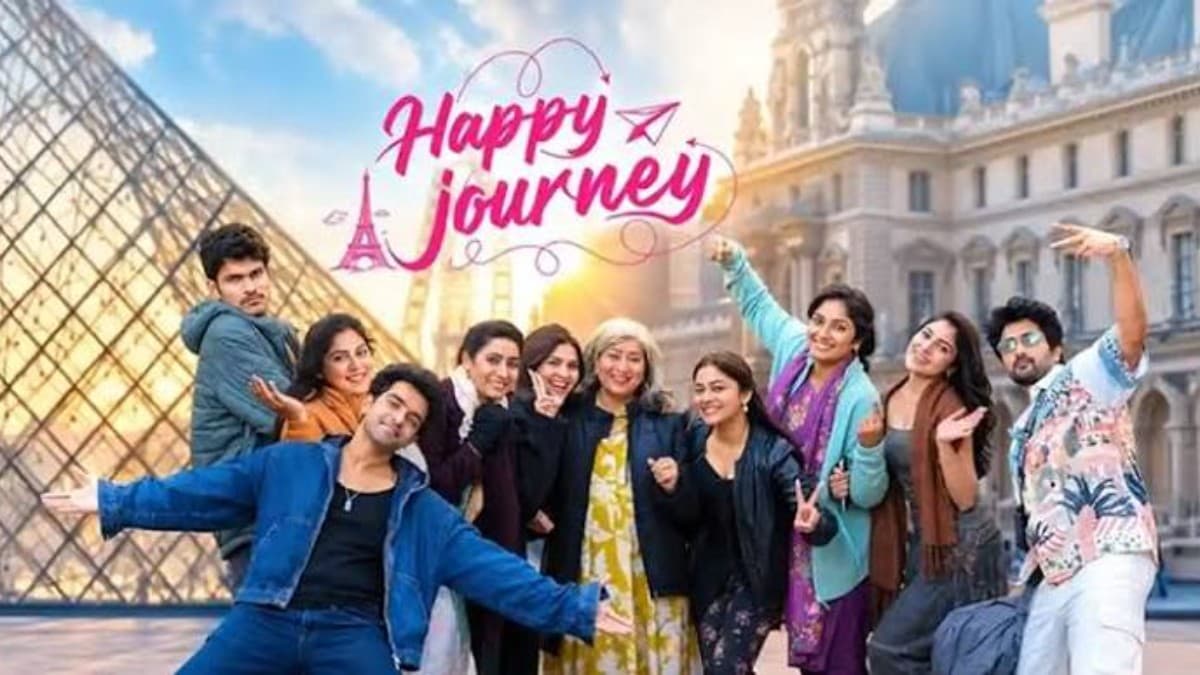
A warm multi-generational women’s travel story finds humour, strong performers and attractive European locations, but its inconsistent screenplay struggles to give the characters and their emotional conflicts enough depth.
Positives
- Annapurnamma brings energy and personality to Savitri
- The seven-woman ensemble offers a refreshing central idea
- Several conversations and travel-comedy portions work
- Subramaniyan Manigandan’s cinematography makes strong use of the European locations
- A few later bonding moments carry genuine warmth
Negatives
- Uneven screenplay and repetitive stretches
- Emotional conflicts are resolved too quickly
- The second half becomes more message-heavy
- Several characters need stronger development
- Comedy and sentiment do not always sit comfortably together
Happy Journey, which reached theatres on September 18, 2026, has the right idea for a light, family-friendly travel comedy-drama. Director Abhiramm Naidu brings together seven women from different age groups and backgrounds for an unexpected European holiday, using the trip as both a comic setup and a way for the characters to confront issues waiting for them back home. The film runs for roughly two hours.
Savitri, played by Annapurnamma, joins Chamundeswari (Aamani), Srilatha (Jhansi), Tanvi (Payal Radhakrishna), Nayana (Jinisha Alishetty), Divya (Sunaina) and Vihaana (Roopa Srinivas) after they receive a free Europe trip through a lucky draw. Govind, played by Vamshidhar Goud, and Apparao, played by Ravi Siva Teja, handle the travel arrangements. What begins as a holiday gradually turns into a story about friendship, family tensions, loss, relationships and the need for personal space.
The premise gives the film plenty to work with. The early portions benefit from personality clashes, awkward conversations and the novelty of seeing characters from different generations sharing the same trip. There are stretches where the comedy feels easy and the ensemble chemistry gives the film the relaxed tone it needs. The writing, however, keeps moving between jokes and personal problems without developing enough of those conflicts before asking viewers to invest emotionally.
Performances, Writing and Technical Work
Annapurnamma is the standout performer, particularly because Savitri allows her to play a livelier, more modern character than many of her familiar screen roles. Jhansi also gets moments that combine humour with emotion, while Payal Radhakrishna, Aamani and Sunaina contribute effectively within an ensemble that does not always distribute its material evenly. Vamshidhar Goud and Ravi Siva Teja provide much of the lighter comedy, although their track occasionally pulls attention away from the women whose personal journeys should remain at the centre.
The story credited to Hemant Dhome has an appealing foundation, but Abhiramm Naidu’s execution is inconsistent. The film works better when the women simply talk, argue, travel and slowly form connections. Around the interval and into the later portions, the group dynamic starts producing some of the film’s warmer scenes.
The screenplay then asks the individual family and relationship conflicts to carry more weight, and that is where the weaknesses become clearer. Several misunderstandings and personal problems receive hurried solutions, while repeated scenes and explanatory dialogue reduce the impact of the emotional passages.
Visually, the European setting is one of the film’s strongest assets. Subramaniyan Manigandan photographs the locations attractively without letting the travel backdrop disappear behind the drama. Shekar Chandra’s music supports portions of the journey, though assessments of the songs vary across the early reviews. Chota K. Prasad’s editing keeps individual stretches moving but cannot fully correct the screenplay’s inconsistent rhythm.
Happy Journey is most likely to connect with viewers who enjoy gentle family dramas, female ensemble stories and travel-based comedy rather than fast-moving commercial entertainment. The locations and group performances give the theatrical version some appeal, but viewers who are mainly interested in the emotional drama may find the uneven second half better suited to a relaxed OTT watch later.
Verdict
Happy Journey is a well-meant but uneven one-time watch. Its multi-generational female ensemble, Annapurnamma’s lively performance, occasional comedy and European photography give the trip enough pleasant moments, but the writing rarely explores its seven women as deeply as the premise promises.
For families and viewers looking for an easygoing women-led travel drama, there is enough here to sample in theatres. Those expecting sharper comedy or a stronger emotional payoff can comfortably wait for its eventual home-viewing release.