

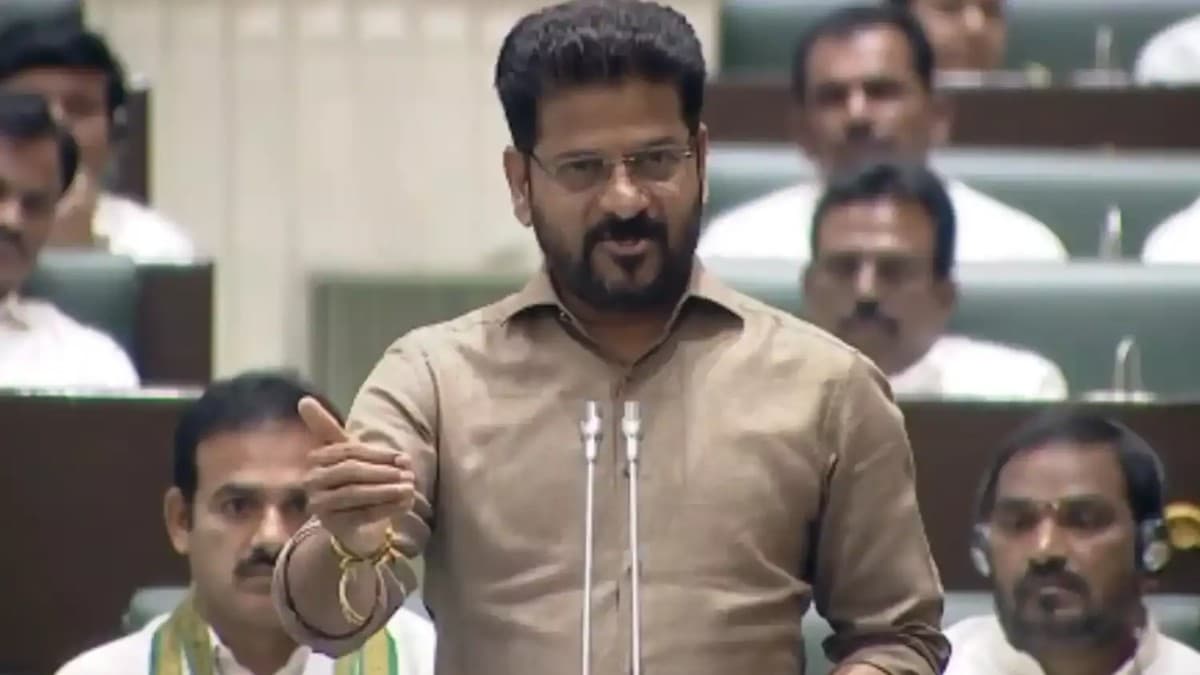
Telangana Chief Minister A. Revanth Reddy used Wednesday's Assembly debate to dispute the Opposition's portrayal of the Section 22A controversy, saying the roughly one-crore-acre figure refers to the wider prohibited-land list rather than one crore acres of disputed private property. He told the House that about 3.73 lakh acres in the list are private patta land and accused the previous BRS government of leaving behind land-record problems through the Dharani system.
Key facts
- Revanth Reddy said roughly 1.02 crore acres are covered by Section 22A prohibited categories.
- He put private patta land within the list at about 3.73 lakh acres.
- The government says most of the larger total consists of assigned, forest, government, shikam, endowment, Wakf and other legally restricted categories.
- Revanth announced clearer procedures for adding or removing properties from the prohibited list and relief for eligible private properties included by mistake.
Revanth Targets BRS Over Dharani
Revanth alleged that the present controversy was rooted in the way land records and prohibited properties were handled during the BRS government's Dharani period. He argued that the larger prohibited-land figure was being presented as though the Congress government had newly blocked the same extent of private property, while the government's figures separate permanently restricted categories from private patta land.
The Chief Minister also alleged that the existing prohibited-list problems were inherited from the previous administration and criticised the handling of Dharani. These allegations remain disputed by the BRS, which has accused the Congress government of mishandling Section 22A entries and affecting owners of houses, plots and agricultural land.
The latest Assembly figures broadly match data presented earlier by Revenue Minister Ponguleti Srinivas Reddy. He had told the House that 1,02,05,250 acres were on the prohibited list as of August 31, including 3,73,930 acres of private agricultural land, while the overwhelming majority belonged to government-related and other restricted categories.
New Process for Section 22A Entries
Revanth outlined a more defined process before land is placed in the prohibited category. He said a Sub-Collector or Revenue Divisional Officer would conduct an inquiry, verify survey and ownership details and check relevant revenue, endowment and Wakf records. If only part of a parcel qualifies for prohibition, only that portion should remain under Section 22A.
Under the process described in the Assembly, the property owner would receive notice using KYC details, with other delivery methods used when necessary. A 15-day period would be available for objections. Revanth said the inquiry record and order would be supplied to the affected person and that entries would reach registration records only after the prescribed process and government orders were completed. He also said properties would not be manually added to the prohibited list.
The Chief Minister said the government had identified 12 types of Section 22A problems requiring resolution. He announced that registrations pending in approved layouts would be addressed within a week, while properties regularised under government orders, eligible auctioned properties and private lands wrongly included in the list would be considered for removal. A separate policy for Urban Land Ceiling-related cases is also planned.
BRS working president K. T. Rama Rao has rejected the Congress government's version and demanded a judicial inquiry into the Section 22A controversy. He has accused the present government of wrongly placing ordinary people's properties in the prohibited category and has sought an independent examination of the land-record changes, keeping the dispute between the government and Opposition unresolved.